
Why Am I Overstimulated? Understanding the Root Causes and How to Reset
What Does Overstimulation Mean?
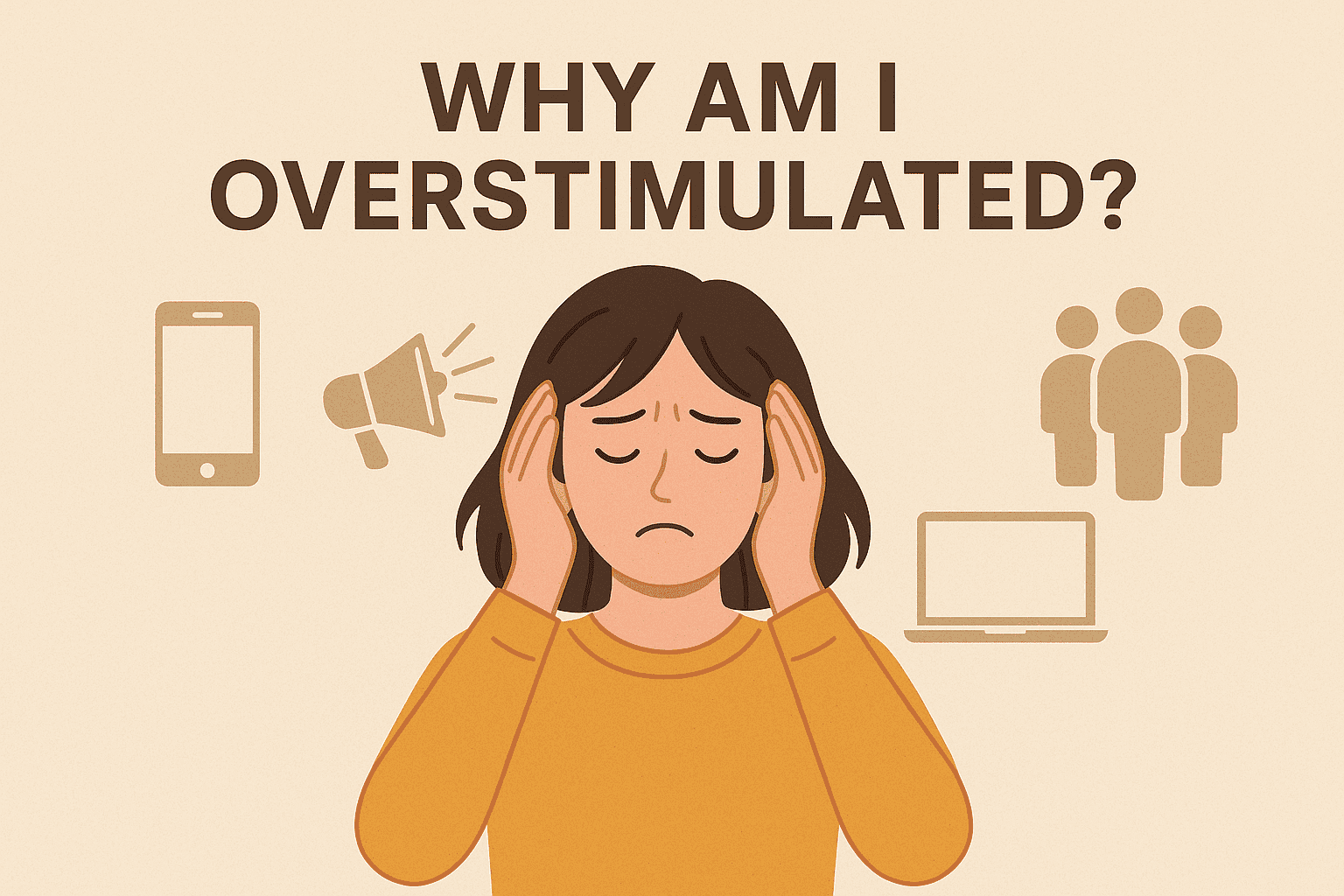
Overstimulation happens when your brain is processing more input than it can comfortably handle. Think of your nervous system like a circuit board: too much noise, light, activity, or even social interaction can overload it. This can lead to feelings of irritability, anxiety, fatigue, or the need to withdraw.
Common Causes of Overstimulation
1. Sensory Overload
Bright lights, loud noises, strong smells, or busy environments (like shopping malls or offices) can overwhelm your senses. Sensory overload is especially common for people who are highly sensitive or neurodivergent (such as ADHD or autism).
2. Digital Overstimulation
Between smartphones, social media, and endless news cycles, your brain rarely gets a break. This kind of digital overstimulation is one of the most common reasons people feel mentally exhausted today. Constant multitasking drains focus and floods your system with dopamine spikes that can quickly turn into burnout.
3. Stress and Anxiety
If you’re already stressed, your nervous system is on high alert. Even small triggers—like background noise or interruptions—can feel overwhelming and lead to signs of overstimulation such as irritability and restlessness.
4. Social Overload
Even positive social interactions can be draining. Too many conversations, group settings, or crowded events can cause social overstimulation, especially for introverts or people who need quiet time to recharge.
5. Sleep and Nutrition
Poor sleep or skipping meals makes it harder for your body to regulate sensory input. A tired or undernourished brain is more sensitive to external stressors, making overstimulation more likely.
Signs You May Be Overstimulated
- Difficulty focusing or concentrating
- Feeling “on edge” or anxious
- Irritability or snapping at small things
- Physical tension (headaches, tight shoulders, fatigue)
- Urge to withdraw, shut down, or escape an environment
If these signs of overstimulation sound familiar, it may be time to reassess your environment and habits.
How to Reset and Reduce Overstimulation
1. Create Space for Quiet
Step away from screens, noise, and crowds. Even 10 minutes of silence can help calm overstimulation and reset your nervous system.
2. Practice Sensory Grounding
Use calming techniques like deep breathing, dimming lights, or listening to soothing sounds to balance your senses. These are effective tools when dealing with sensory overload.
3. Set Boundaries with Tech
Turn off non-essential notifications, schedule screen-free time, and avoid scrolling before bed. Digital overstimulation often lessens when you control your tech use.
4. Prioritize Rest and Nutrition
Good sleep and balanced meals help your body handle sensory input more effectively. This reduces the chances of becoming overstimulated.
5. Plan Recharge Time
If you know social events or busy environments drain you, schedule downtime afterward. Protecting your nervous system with recovery time is essential for long-term balance.
Final Thoughts
If you’ve been wondering “Why am I overstimulated?”—you’re not alone. Overstimulation is your brain’s way of signaling it needs a break. By paying attention to triggers, reducing digital overstimulation, and practicing restorative habits, you can create more balance in your daily life.
Remember: it’s not about avoiding stimulation altogether—it’s about managing it so your mind and body feel safe, calm, and capable.
FAQs About Overstimulation
1. What causes overstimulation in adults?
Overstimulation in adults can be caused by sensory overload, digital overstimulation, high stress levels, poor sleep, and excessive social interaction. Environmental factors like noise, crowds, and bright lights can also trigger it.
2. Can overstimulation cause anxiety?
Yes, overstimulation can trigger or worsen anxiety. When the nervous system is overloaded, it becomes harder to regulate emotions, leading to restlessness, irritability, and anxious thoughts.
3. Is overstimulation the same as sensory overload?
Not exactly. Sensory overload is a specific type of overstimulation caused by excessive sensory input (sounds, lights, smells, etc.). Overstimulation can also come from mental, emotional, or digital sources.
4. Why do I get overstimulated so easily?
Some people are more sensitive to stimulation due to personality traits, introversion, or conditions like ADHD, autism, or anxiety disorders. Lifestyle factors—such as lack of rest, high stress, or too much screen time—can also make you more prone to overstimulation.
5. How can I calm down when I feel overstimulated?
Step into a quiet space, practice deep breathing, dim the lights, or listen to calming sounds. Taking a walk, unplugging from screens, or practicing mindfulness are excellent ways to calm overstimulation and reset your nervous system.